Material and weathering
Corten steel by the sea
Corten steel forms a firm layer of rust that protects the steel beneath. That is why the material works outdoors, and why it looks the way it looks.
There are two things to know before you buy it.
For the first two years it bleeds
Until the protective layer closes, rain washes loosened particles downwards. On pale marés, on white terrace slabs and on fair-faced concrete that leaves marks which stay. Marés is the yellowish sandstone that most walls and terraces on Mallorca are built from.
The answer: do not set it straight onto pale natural stone. Gravel, dark slabs, lawn, or a base plate with a gap under it. We plan that at installation; it is not a repair afterwards.
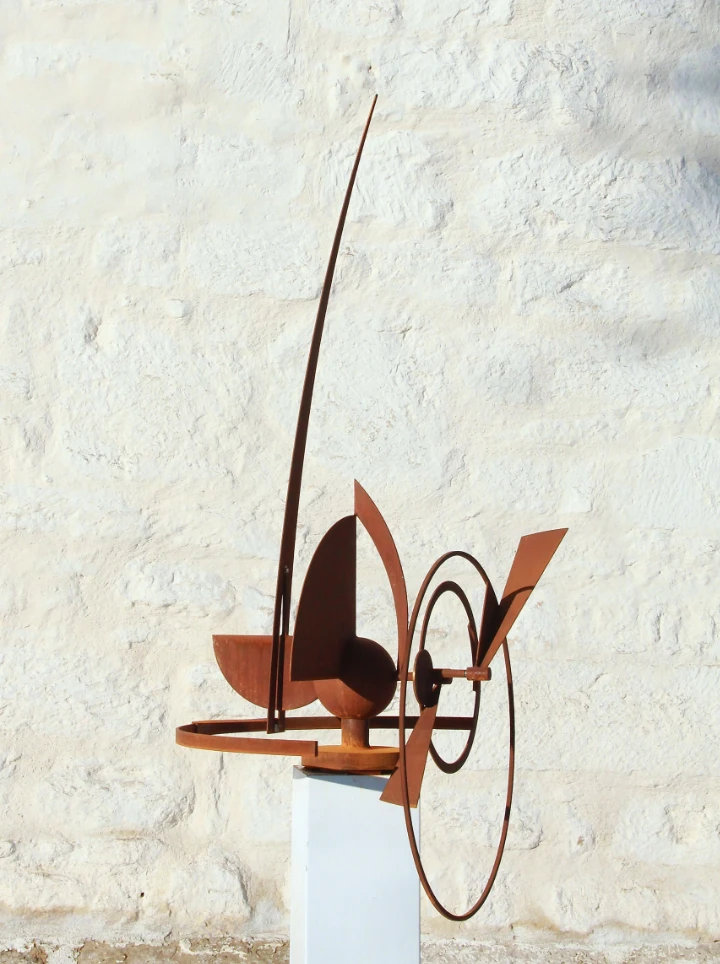
Michael Ernst | kinetic sculpture | corten steel
Photo: Sculpture Mallorca / Rolf Herbert Zscharnack
In the front row by the sea it behaves differently
Salt keeps the layer from closing completely. In the front row by the water corten steel stays more active, the material wears away slowly and the surface grows rougher. With substantial wall thicknesses that is irrelevant over decades. With thin sheet it is not.
So before every sale we ask how far you are from the water. Under […] metres we recommend bronze or stainless steel, even though we earn less that way.
By the pool the same applies again, more sharply: see Sculpture by the pool.
Care
None. Do not oil it, do not seal it, do not brush it down. The material does its work on its own.
How far your site really is from the water is one look at the map away.